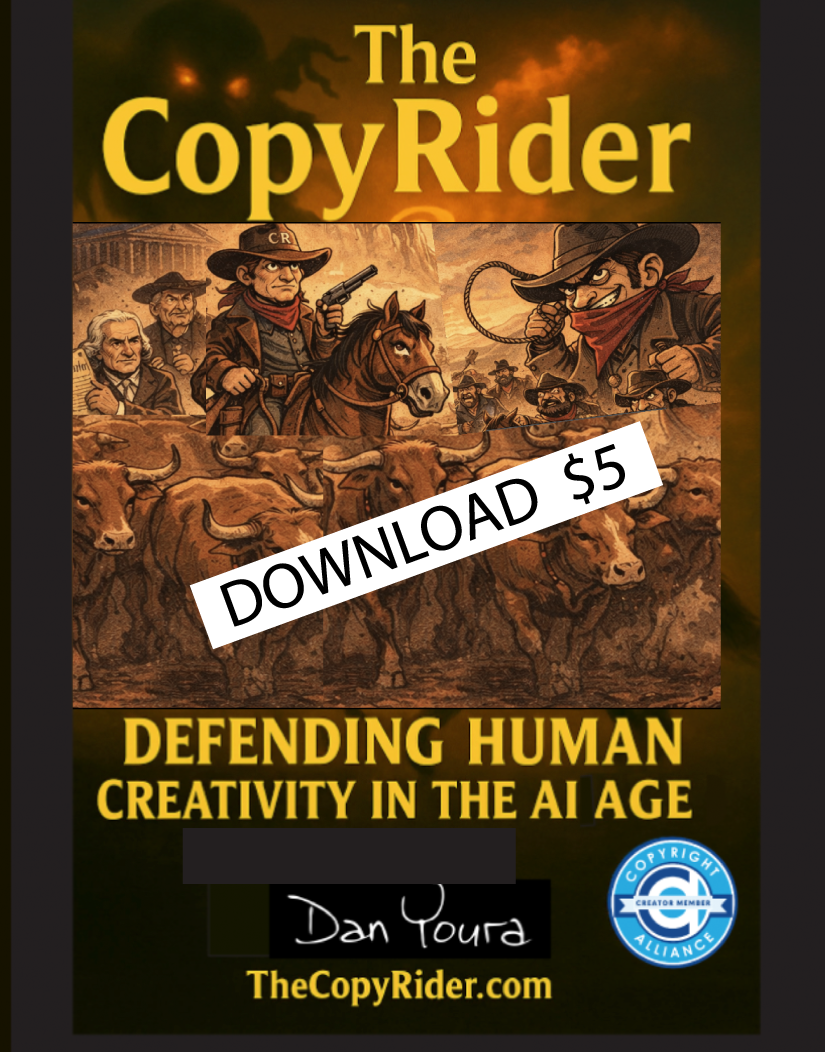
Copyright “Promotes The Progress of Science and Useful Arts . . .

. . . by Securing for Limited Times to Authors and Inventors the Exclusive Right to Their Respective Writings and Discoveries.” Article 1, Section 8, Clause 8
Copyright Economics™
The Economic Science of Intellectual Ownership in the Age of Artificial Intelligence
Copyright Economics establishes copyright as the foundational economic infrastructure governing ownership, value creation, and capital formation in the modern knowledge economy and the emerging artificial intelligence era.
Originating in the United States Constitution as a Right (with a Capital letter “R”) and rooted in the economic philosophy of James Madison, copyright exists to secure to creators the ownership of their intellectual labor, thereby promoting the progress of science, useful arts, for the prosperity pe fall people.
As artificial intelligence systems increasingly depend upon human creative output, the protection, recognition, and operationalization of intellectual ownership becomes the central economic challenge of our time. Copyright Economics defines, formalizes, and advances this essential framework.
Constitutional Foundation
Copyright originates as an enumerated Right in the United States Constitution, established to promote the progress of science and useful arts by securing exclusive ownership rights to authors and inventors.
This principle reflects a profound economic insight: when individuals own the results of their intellectual labor, they are empowered to create, innovate, and contribute to the advancement of society. The protection of intellectual ownership is therefore not merely a legal mechanism, but an enumerated Right, a foundational driver of economic growth, innovation, and prosperity.
The US Constitution grants copyright protection solely to humans, because the capacity to create belongs solely to human beings, not elephants, Ouija boards, or even to Artificial Intelligence. AI is not human.
The Economic Framework
In the modern knowledge economy, intellectual creation has become the primary source of economic value. Scientific discoveries, technological innovations, artistic works, written expression, and digital creations form the foundation of economic activity and societal advancement.
Copyright Economics establishes that copyright is not simply a legal protection, but a core economic structure governing:
• Ownership of intellectual capital
• Incentives for creative production
• Formation of intellectual assets
• Distribution of economic value
• Stability and sustainability of innovation systems
This framework defines copyright as a central pillar of modern economic infrastructure.
Artificial Intelligence and Intellectual Ownership
Artificial intelligence systems are built upon vast quantities of human-created intellectual content. These systems depend entirely upon human creative output as their foundational input.
This creates a new and urgent economic reality: the stability, fairness, and sustainability of the artificial intelligence economy depend upon the recognition and protection of human intellectual ownership.
Copyright Economics provides the conceptual and economic foundation necessary to govern this relationship, ensuring that technological advancement proceeds in alignment with the rights, incentives, and prosperity of human creators.
Institutional Purpose
Copyright Economics exists to:
• Establish a formal economic doctrine of intellectual ownership
• Advance understanding of copyright as economic infrastructure
• Support the rights and incentives of creators
• Provide frameworks for governance in the AI era
• Promote prosperity through protection of intellectual capital
This doctrine represents the continuation and expansion of the Constitutional principles that have enabled centuries of innovation, progress, and advancement.
Origin
Copyright Economics originated with Daniel G. Youra as a formal economic framework addressing the role of copyright as the foundational infrastructure of the modern knowledge economy and the emerging artificial intelligence era.
© 2026 Youra